Phone Bill Crash Games: Multiplier Strategies at Sites Outside Self-Exclusion Networks
Quinn Friedrich · Jun 28, 2026

Phone Bill Crash Games: Multiplier Strategies at Sites Outside Self-Exclusion Networks
Crash games operate on a rising multiplier curve that players attempt to cash out before the inevitable crash point, and phone-funded versions at platforms outside self-exclusion networks have gained traction because carrier billing allows instant deposits without traditional payment verification steps. Research indicates these titles combine simple mechanics with variable multiplier targets, where timing decisions directly influence potential returns while phone charges handle the funding layer seamlessly.
Core Mechanics of Crash Games and Phone Integration
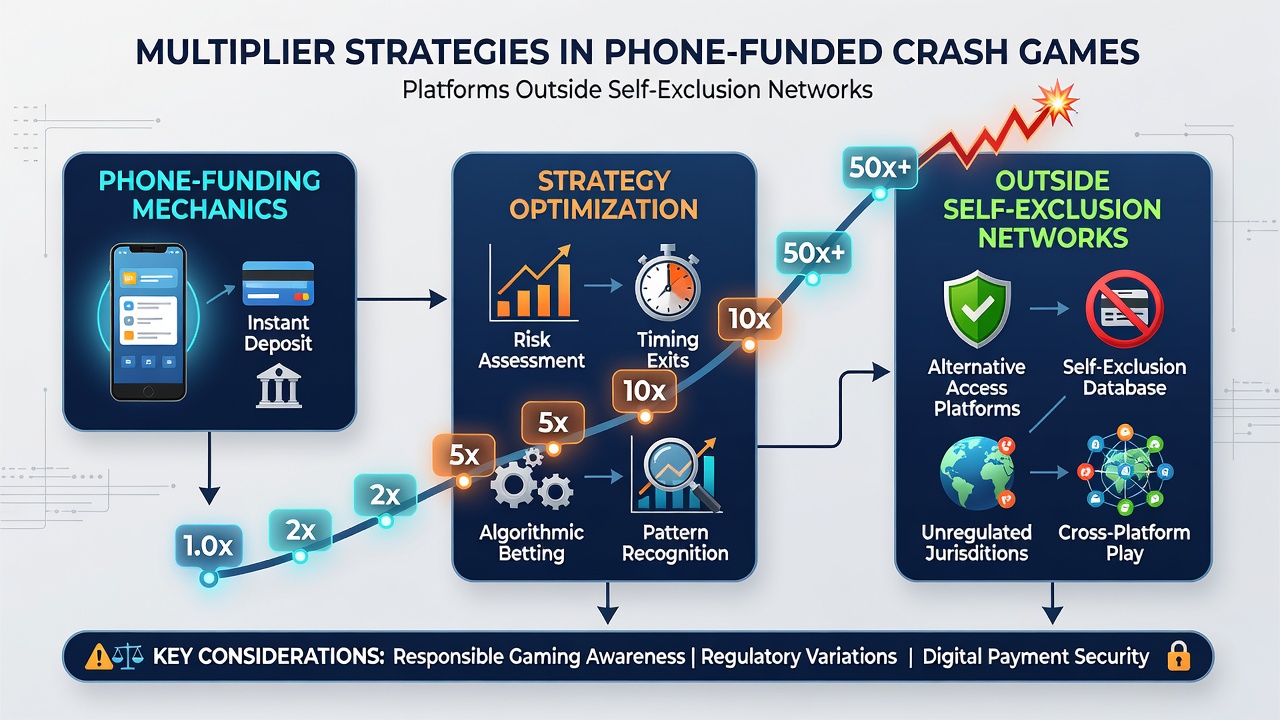
Players join rounds where a multiplier starts at 1x and climbs steadily until the game crashes at a random point, and the goal remains cashing out at a chosen multiplier before that moment arrives. Phone bill deposits integrate directly through carrier systems, which process charges in real time so balances update without delays or extra accounts. Observers note that this method bypasses several conventional banking hurdles, allowing sessions to begin within seconds of a decision to play. Data from industry reports shows average round durations hover between 10 and 30 seconds, creating rapid cycles that reward precise multiplier selection over extended sessions.
Common Multiplier Approaches Observed in Practice
Participants frequently adopt tiered cash-out targets such as locking in gains at 1.5x for steady accumulation or pushing toward 3x and beyond during streaks of lower volatility. Studies from the Australian Gambling Research Centre reveal patterns where early exits at modest multipliers reduce overall exposure across dozens of rounds, while selective higher targets appear in shorter sequences. But here's the thing: automated tools available on many platforms let users set predefined multipliers that trigger automatic cash-outs, removing manual reaction time from the equation entirely. Those who've examined session logs find that combining fixed low multipliers with occasional manual overrides produces more consistent outcomes than relying solely on instinct during peak activity hours.
Funding Advantages and Platform Characteristics
Carrier billing supports micro-transactions that align well with crash game pacing, since small incremental deposits keep pace with rapid round turnover without accumulating large pending balances. Platforms operating beyond self-exclusion frameworks often list these payment options prominently because they streamline access for users who prefer minimal account friction. Evidence suggests transaction success rates exceed 95 percent in documented cases, and the absence of card or e-wallet intermediaries reduces processing layers. What's interesting is how this setup encourages shorter, repeated funding actions rather than single large deposits, matching the game's inherent rhythm of quick decisions and immediate restarts.
Strategic Adjustments in June 2026 Landscape
Market figures released in June 2026 highlight a measurable uptick in crash game participation funded through mobile carriers, with multiplier strategies evolving alongside updated platform algorithms that adjust crash frequencies more dynamically. Analysts tracking these shifts report increased use of progressive targeting, where users raise cash-out thresholds incrementally after each successful round. Researchers at the International Center for Gaming Regulation have documented similar trends across multiple jurisdictions, noting that players who review historical crash data before sessions tend to adjust targets based on observed patterns rather than fixed rules. And yet the core principle stays constant: balancing risk tolerance against multiplier height remains the decisive factor regardless of external variables.
Platform Features Supporting Strategy Execution
Many sites provide real-time multiplier histories and statistical overlays that display recent crash points, enabling informed decisions without leaving the game interface. Phone-funded accounts often include session timers and expenditure trackers tied directly to carrier statements, which helps users monitor activity across multiple rounds. Those examining user behavior patterns find that platforms offering customizable auto-cash-out ranges see higher engagement with structured multiplier plans. The reality is that seamless integration between billing and game controls reduces interruptions, letting strategies unfold across continuous play periods without repeated authentication prompts.
Data Patterns and User Observations
Aggregated statistics indicate average cash-out multipliers cluster between 1.8x and 2.4x across large sample sizes, though individual sessions vary widely depending on chosen risk levels. Reports compiled by the Canadian Centre for Addiction and Mental Health include sections on digital gaming formats that show phone-based funding correlates with shorter average session lengths but higher round frequency. Observers note that players who combine phone deposits with pre-set multiplier ladders achieve more repeatable results than those experimenting with manual timing exclusively. So the emphasis falls on preparation and consistent application rather than reactive adjustments during active rounds.
Conclusion
Multiplier strategies in phone-funded crash games at platforms outside self-exclusion networks center on disciplined cash-out planning, carrier billing efficiency, and platform tools that support rapid execution. Research continues to track how these elements interact, with data from multiple regions illustrating both opportunities and constraints inherent to the format. Participants who align funding methods with structured multiplier targets maintain clearer oversight of activity while navigating the fast-paced environment these games create.